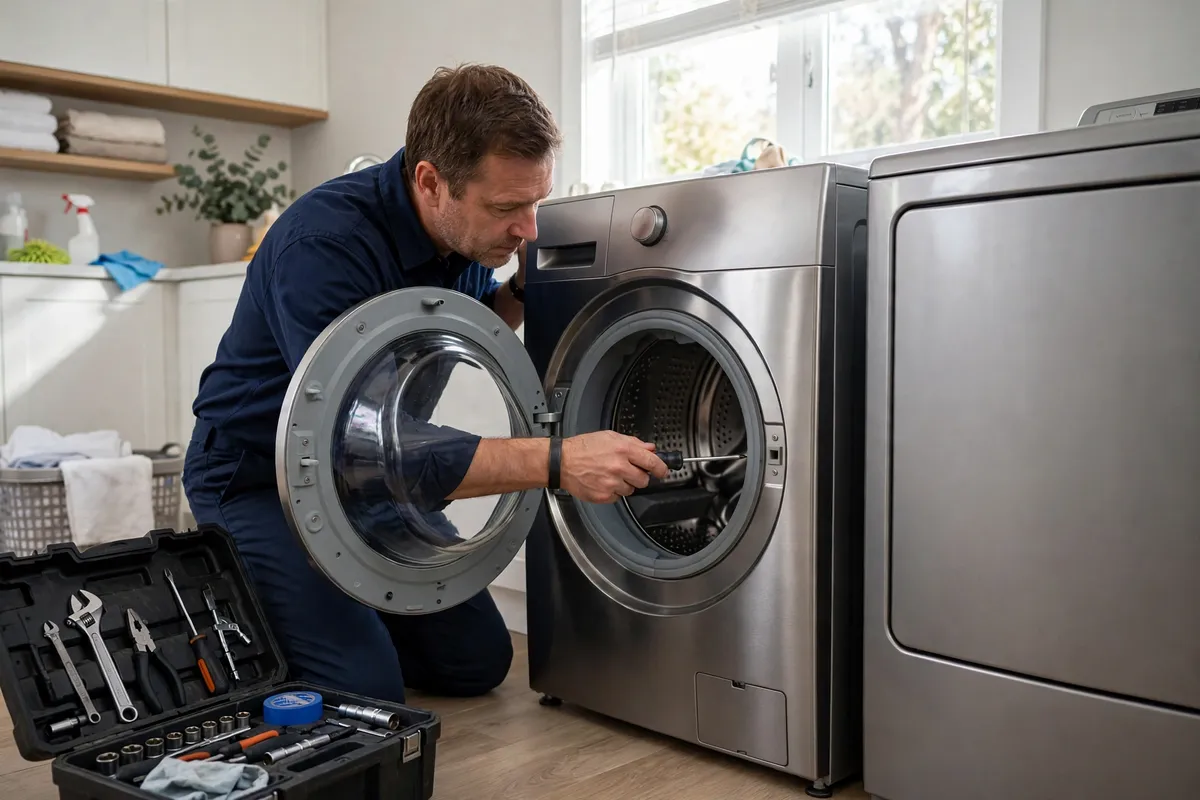
Stop the Water, Safely
Turn the washer off first. Then shut off the water supply valves behind the machine if you can reach them safely without stepping in standing water or reaching past electrics. If you cannot reach the valves safely, switch off the breaker for the washer and call us. Do not run another cycle to see if it leaks again: each cycle can put more water on the floor.
Mop up standing water, move rugs and items away from the wet area, and keep children and pets away from the water. If water is spreading toward walls, electrics, or a lower floor, treat it as urgent and call us right away. See our emergency appliance repair page for what counts as an emergency.
Look, But Do Not Take Things Apart
Once the water is off, look for obvious clues without opening panels or reaching into the machine. Note where the water is coming from: the door, the hoses at the back, underneath the machine, or the drain area. Check whether the drain hose has slipped out of the standpipe, and whether a hose looks cracked, bulging, or loose at a connection. Do not pull hoses off or open the pump filter while water is still in the drum.
Take a photo of the leak area and the hoses if it is safe to do so. A photo helps us bring the right approach, and it is useful for your own records if floor damage needs attention later.
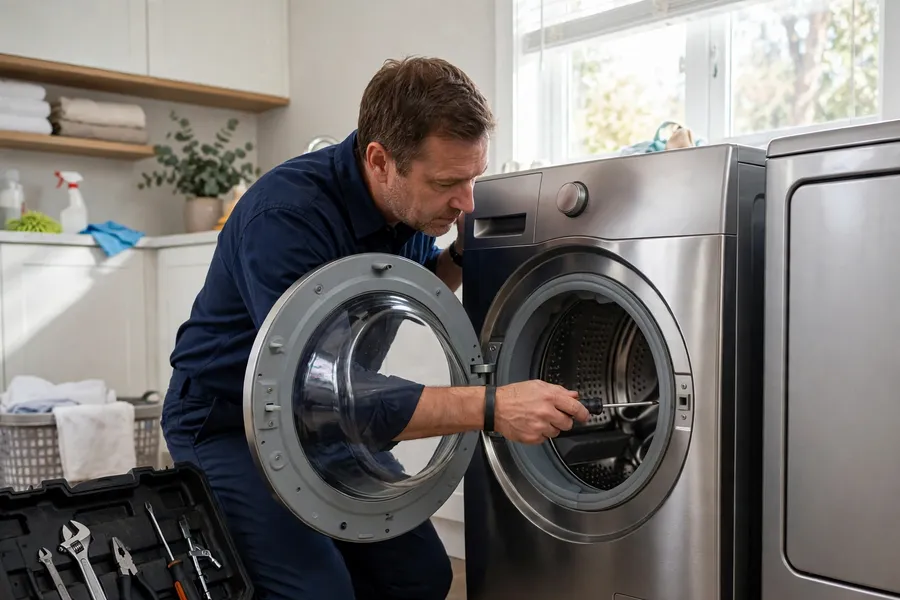
Common Causes, in Plain Language
Most washer leaks come from a short list: a worn or loose hose, a door seal that no longer closes tightly, a drain pump or drain hose problem, or over-sudsing from too much detergent. Overloading the machine, and washing items that trap water, can also push water past the door seal on front-load models.
Less obvious causes include a cracked tub, a failed pump seal, or a water inlet valve that does not shut off fully. Those need diagnosis, because the leak may only appear at one point in the cycle. Tell us when the leak happens: during fill, wash, drain, or spin, and whether it happens on every load.
What to Tell Us When You Call
Tell us the brand and model number if you can find it, where the water is coming from, when in the cycle it leaks, and whether the water is still spreading. Tell us too whether the washer will still drain and spin, and whether you have already shut off the water. That information helps us prioritise the visit and bring the right parts and tools.
Do not use the washer again until the leak has been found and fixed, even if it looks dry. A small leak that returns can become floor, cabinet, and subfloor damage. See our washer repair page for what a visit includes.